Back In The Field - Why Male Pheasants Look Fabulous While Females Stay Camouflaged?
Why Are Male Pheasants So Colourful?
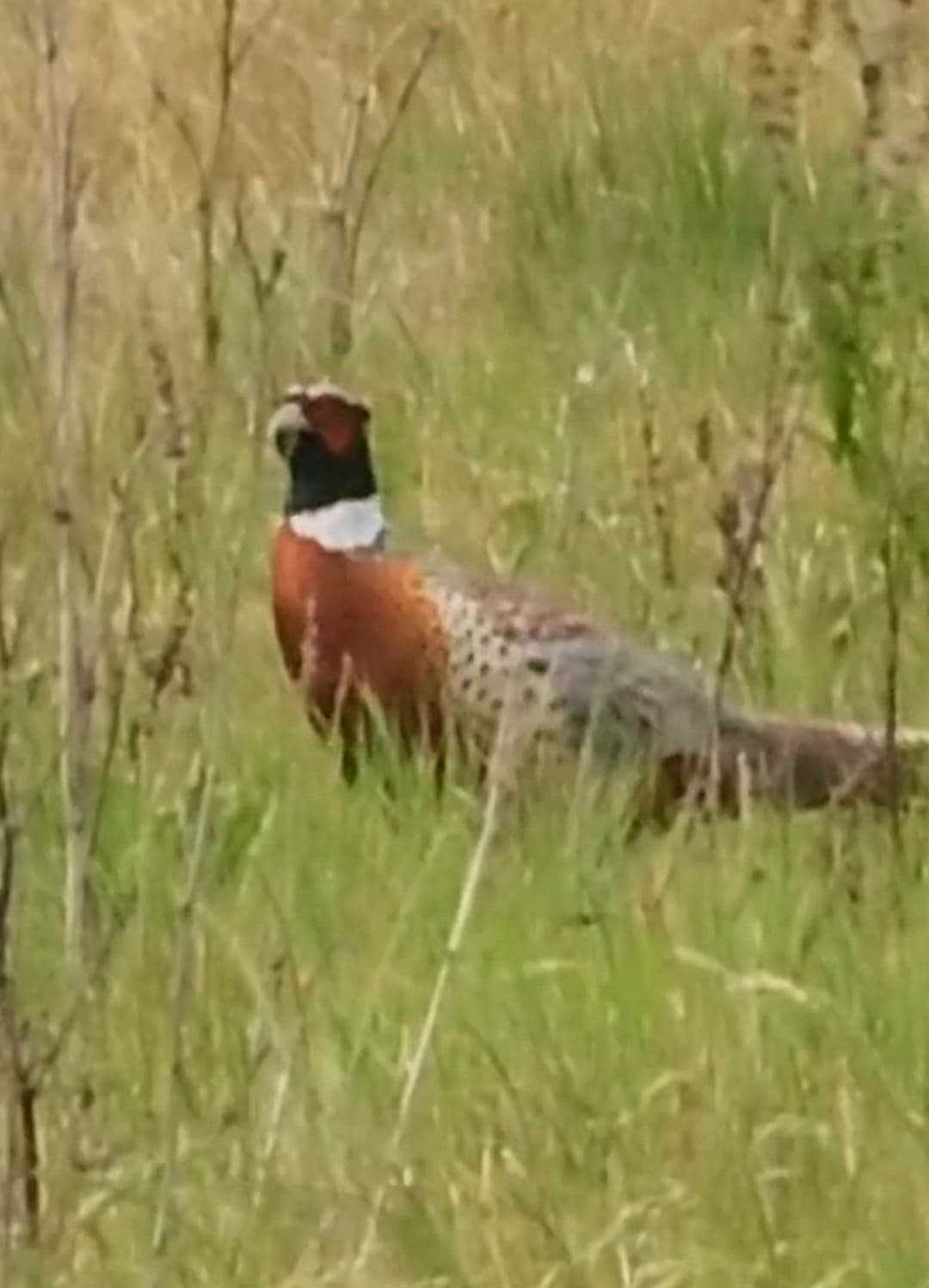
Walking around the farm during my lunchtime break, in the Suffolk Countryside, I spotted a male pheasant strutting across the field like he owned the place.
Actually, he wasn't walking. He was performing. Chest puffed out. Tail feathers fanned. Colours blazing in the sunlight like a disco ball that had somehow acquired legs.
Behind him, a female pheasant quietly slipped through the grass, looking about as glamorous as a brown potato. It made me wonder. Why does Mr Pheasant get the designer wardrobe while Mrs Pheasant looks like she shops exclusively at the "Practical-Outdoor-Survival" Clothing department?!
The answer lies in one of nature's oldest and most entertaining games: dating!
The World's Most Competitive Beauty Contest
In the pheasant world, the males have one job: "Look fabulous!" The females have another: "Don't get eaten!"
As romantic strategies go, they are remarkably different. Male pheasants compete with one another for female attention. Over thousands of generations, the flashiest males had a better chance of attracting a mate.
The result? An explosion of colour. The radiant greens, shimmering purples, bright red face patches, and extravagant tail feathers are essentially nature's version of a sports car, luxury watch, and six-pack abs rolled into one.
The message is simple: "Look at me! I am beautiful! I am healthy! I am strong! I have excellent genes! Whether the females are impressed is another matter entirely.
Why Female Pheasants Need Camouflage?
Female pheasants spend much of their time nesting on the ground. This is where being a walking rainbow becomes a terrible life choice.
Imagine trying to hide from foxes while dressed like a Las Vegas showgirl! Exactly, my point!
The females' subdued brown feathers are camouflage and keep them alive. When sitting on a nest, they literally disappear into the vegetation. A fox might stroll past within a few metres and never notice her.
Meanwhile, her brightly coloured husband can probably be spotted from three fields away, parading around like a Las Vegas Act who accidentally joined a farming community. While he's busy modelling his latest feather collection and auditioning for Britain's Got Talent: Woodland Edition, she is doing the real work: building a nest, protecting the eggs, and ensuring the next generation survives.
The Peacock Syndrome
Pheasants are not alone. Across the animal kingdom, males often look as though they hired a personal stylist while females opted for sensible waterproofs. Think of peacocks. Think of lions. Think of certain humans on social media.
The scientific term for this is sexual selection. The prettier, louder, or more impressive males are more likely the ones who will attract mates, so those traits get passed on. Nature essentially rewards successful showing off.
The Hidden Cost of Being Gorgeous
Being handsome sounds great until you realise predators can see you too. Those dazzling colours don't just attract females. They also attract foxes, buzzards, and anything else looking for lunch.
It's one of nature's great trade-offs. The very thing that helps him find 'love' also makes him easier to find by a raft of other creatures not looking for love.
Many male pheasants don't survive very long.
Lessons from the Pheasant Dating Scene
Watching pheasants reminded me of something surprisingly human. The loudest, flashiest individual often gets the attention. The quieter individual is usually busy doing the important work.
One is optimised for visibility and physical attraction. The other is optimised for survival. Both strategies have their place.
But if you're ever feeling underdressed, underappreciated, or less glamorous than everyone else around you, remember the female pheasant.
While Mr Pheasant is busy auditioning for "Britain Got Talent," Mrs Pheasant is successfully raising the next generation and avoiding being eaten by Mr Fox.
Not every life is meant to shine brightly. Some are meant to endure, nurture, and quietly shape the future.
With Gratitude, Caffeine & a Plot Twist
Joanne Reed
Head of Story Operations
If you value clarity in a world engineered to overwhelm you, consider fueling this work on Ko-Fi 👇 ☕
https://ko-fi.com/post/Back-to-The-Field--Why-Are-Male-Pheasants-so-ridi-T3G821T5EB
Share it. Support it. Engage with it.
For those who wish direct access, I invite you to step into the Reed Salon. This is an invitation to the Strategic Room: direct access, topic requests, co-creation, unfiltered thinking, and more.
Not ready? No Pressure. Tip the story. A small tip keeps the lantern lit. Share the signal. Stay in the conversation.
Want a whole lot more? My book “This is Your Quest” dives deeper into genius, growth, and life’s playful paradoxes. Available on BookLocker, from Amazon, or from Barnes & Noble.
Share this:
2 Comments
Leave a comment
Comments are reviewed before they appear on the site.
I love the humour you have put into this piece like “auditioning for Britain’s Got Talent: Woodland Edition”.
Yeah! So glad to hear that! It is amazing how much one can learn watching birds of feathers doing their thing and if I can add some humour into the mix even better! I appreciate you being here taking the time to read and comment 🙏!